
Travel in Northern Botswana has gone much more according to plan than in the south! From Gabarone, Julia, Emily and I caught a bus to Gweta. The bus station in Gabarone is so busy, and rather than having a ticket counter, you just get on the bus going to your destination (we triple checked we were on the right one) and pay during the trip. After a transfer in Francistown and roughly eight hours on hot buses, we arrived in Gweta to spend a few nights.
Such clean, comfortable buses
There isn’t much to the village of Gweta itself, but it’s located near the saltpans, and is known for its baobabs (aka the plants Rafiki lived in and drew Simba’s picture in). We stayed at Planet Baobab, and arrived at night to find the baobabs lit up, and, much to the delight of my treeplanting side, a couple of hammocks set up under the largest one on site.

Night hammock
Our first day there was spent relaxing, and it was a great day to chill out in the largest pool in the Kalahari under the baobabs (and for me to work on my tan – I am my mother’s daughter). I love the heat, but forty degrees without a pool would probably wear on me eventually.
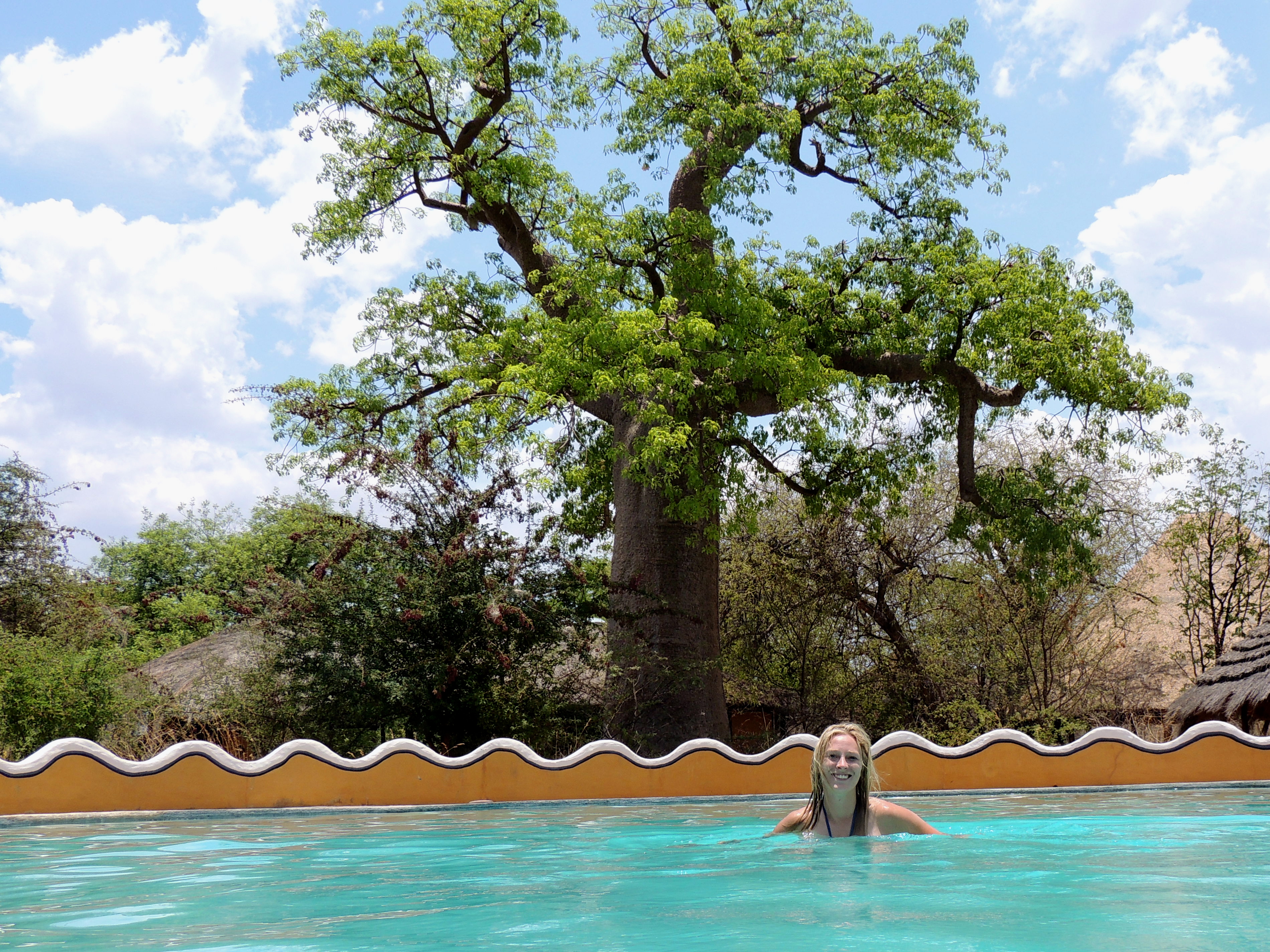
Biggest pool in the Kalahari!
That evening, we took a guided stroll through the bush around the lodge, and returned with fun tree facts! Baobabs are actually not trees scientifically – they’re a grass species. Since they aren’t trees, they don’t have rings, which means their age is determined by their diameter. Every metre is equal to 250 years.
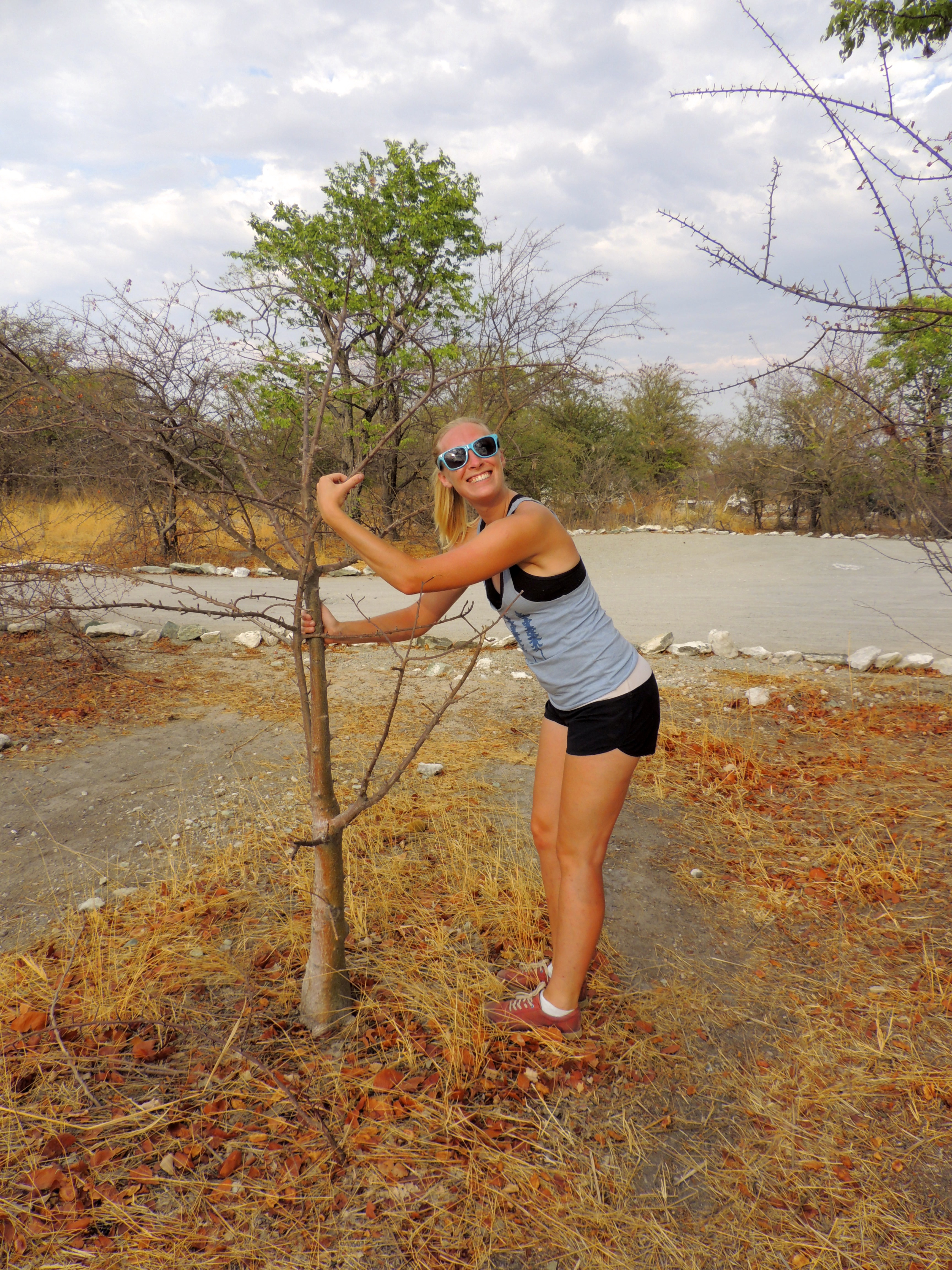
Hugging the babyab – 75 years young!
The following day, we headed out to the Nxai (pronounced nigh) pan. It was an incredible place to visit, and I wish we had more time so we could have camped there. There were plenty of animals, and I got to see several jackals! No wild dogs yet, but the jackals look like mini versions of my Varta, so they delighted me.

Curled up like a Varta dog
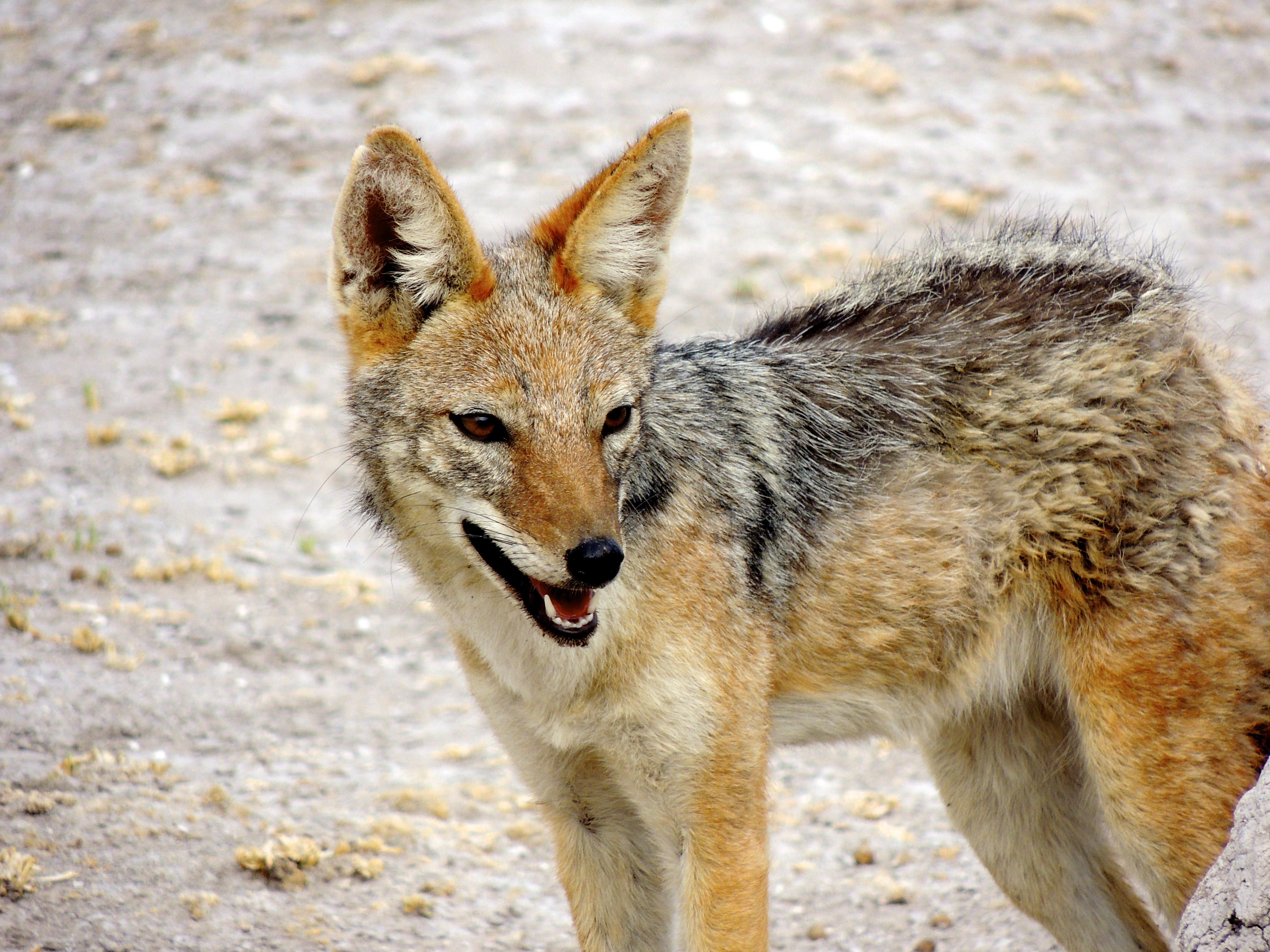
Cute little jackal
There were also big five animals in the park, and Julia and Emily were excited to cross a couple species off their list, all before breakfast!
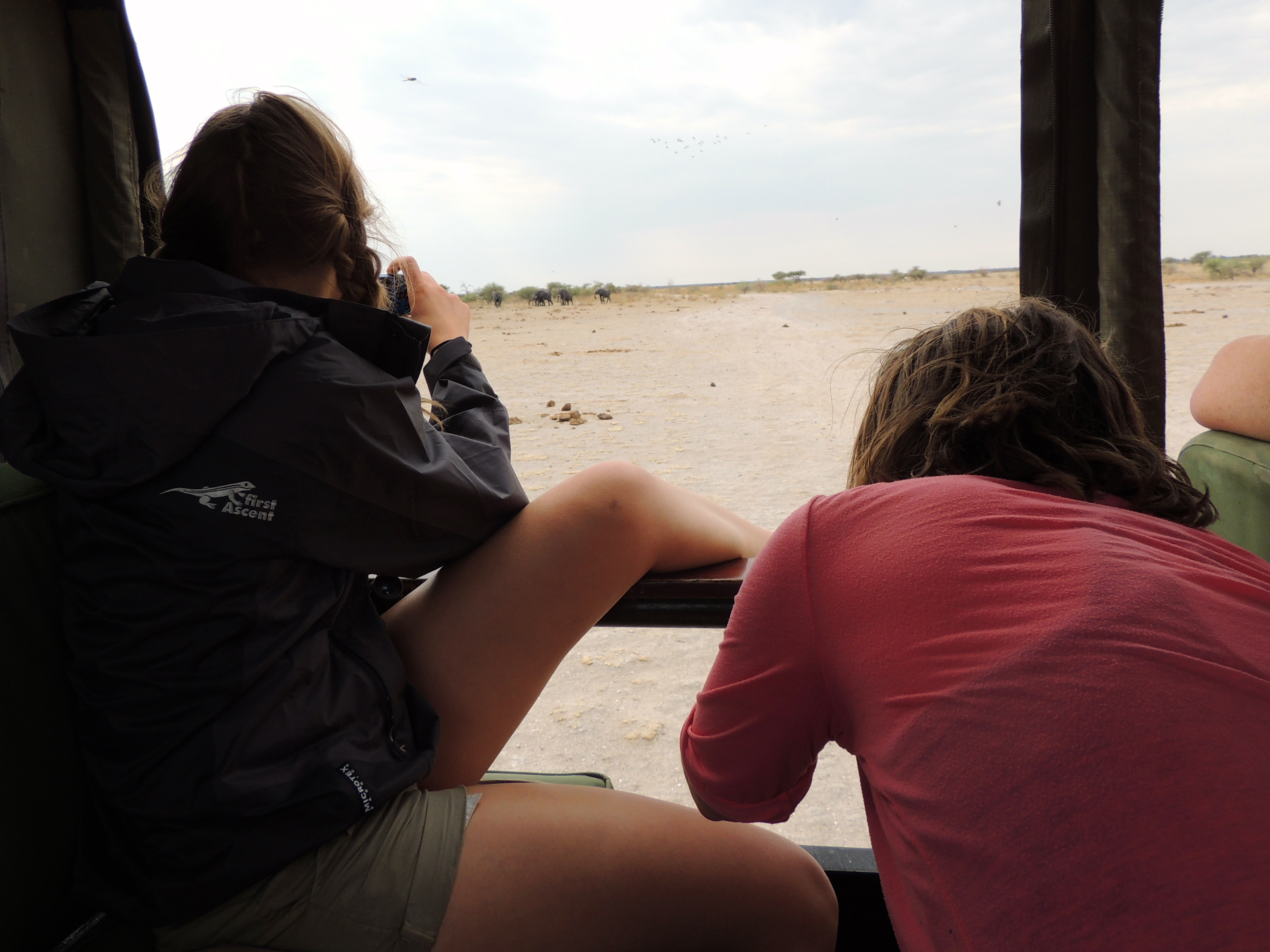
First timers watching elephants
We spent a good time at a watering hole, where we saw giraffes, elephants, wildebeest, impala, kudu, springbok, and ostriches (with their hilariously tiny babies), among other animals. As we were leaving the watering hole, one of the delightful Brits in our jeep called for the driver to stop.
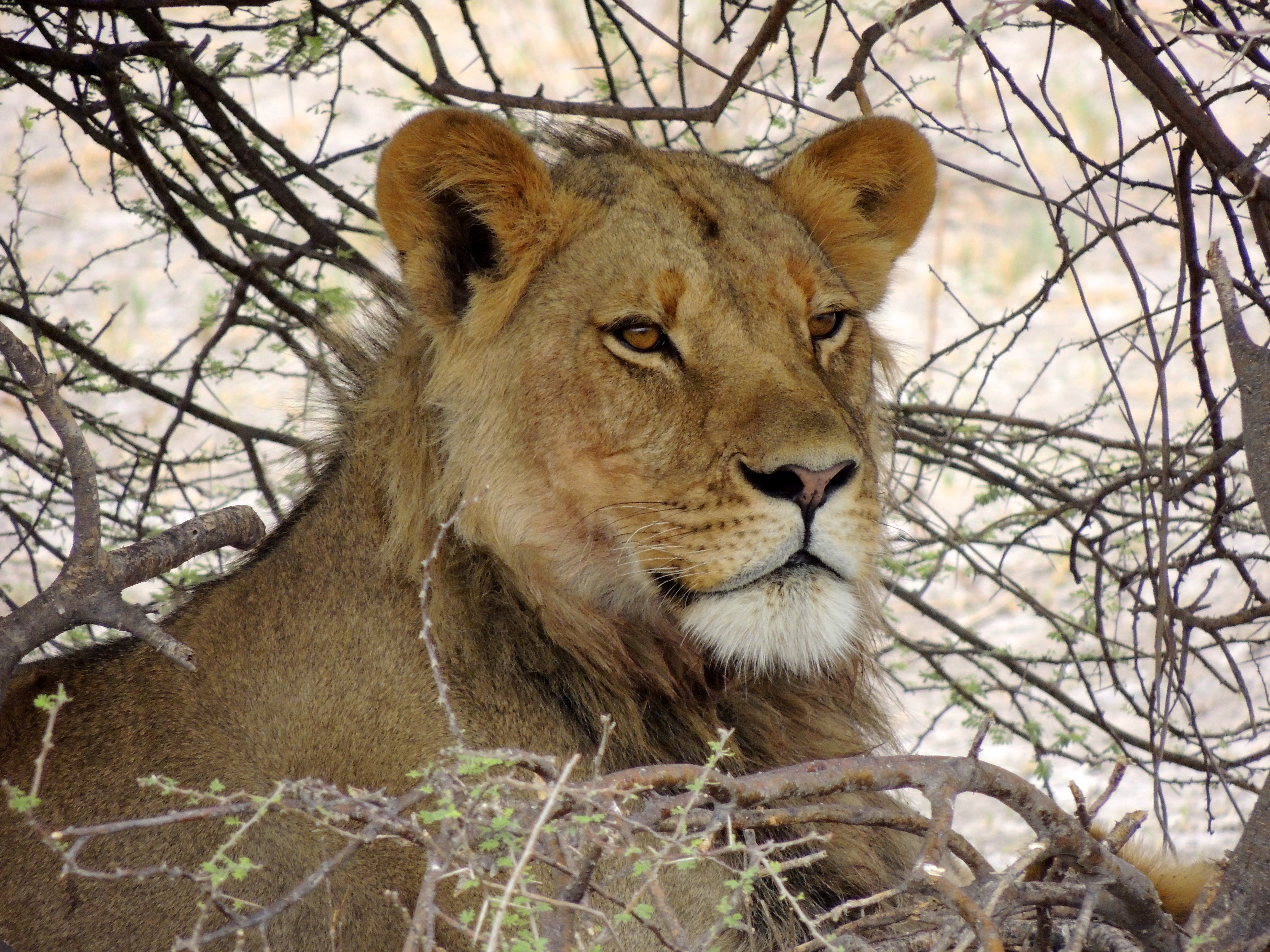
Simba!
A pair of lions was having a nap under a tree after listening (presumably) to “Can You Feel the Love Tonight.” (No, Lion King reference will never get old for me). It was adorable.
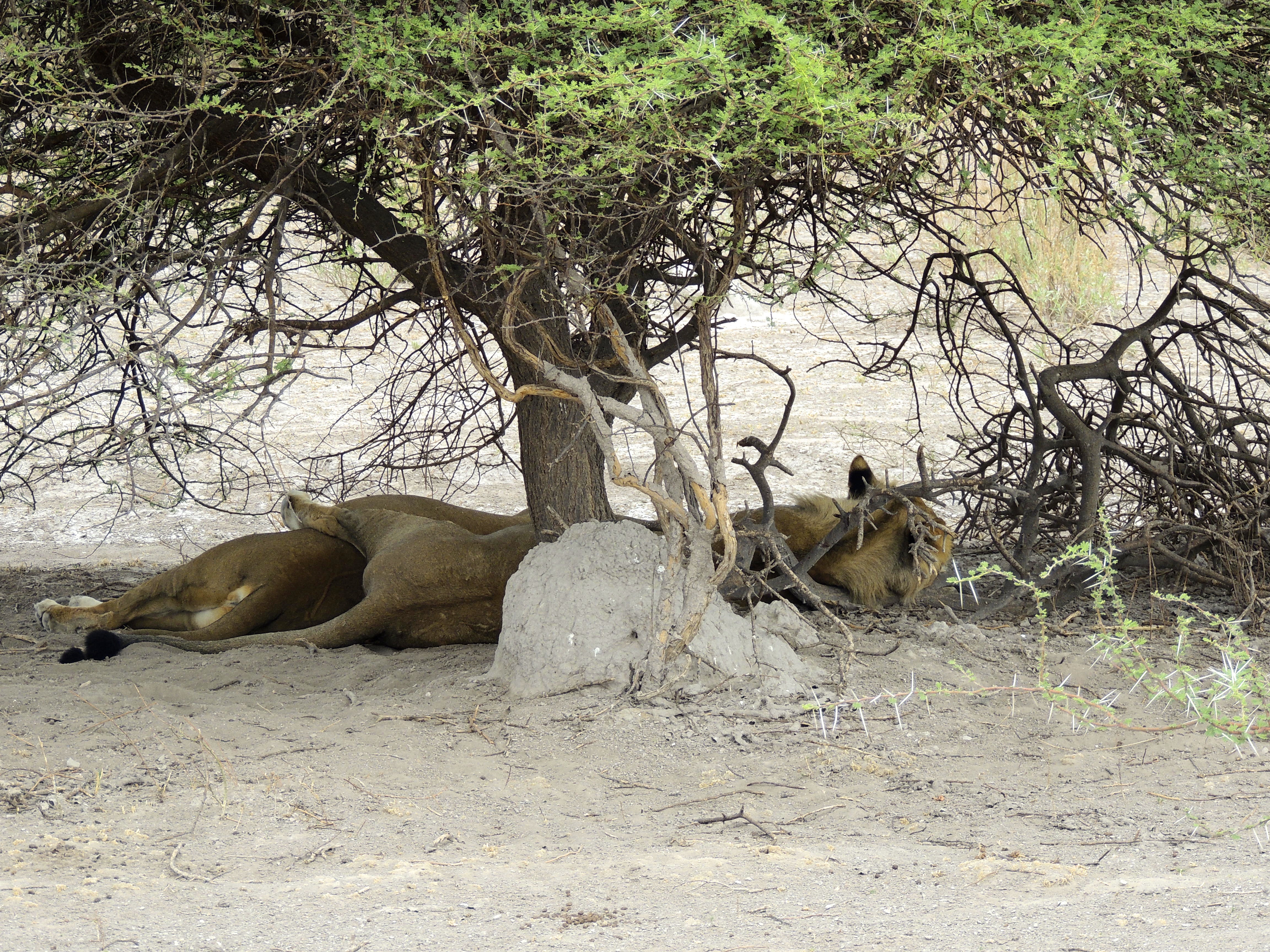
Simba and Nala spooning!
After sufficiently disturbing their cat nap (that joke is for you, Hannah) we headed off to have breakfast at one the campsites. Apparently hornbills are quite the little scavengers! We had a pair approach us trying to get some snacks. Yes, I was slightly terrified at how close they were to me. Alfred Hitchcock really could have done a number on his victims if he used more exotic birds than sparrows and crows.
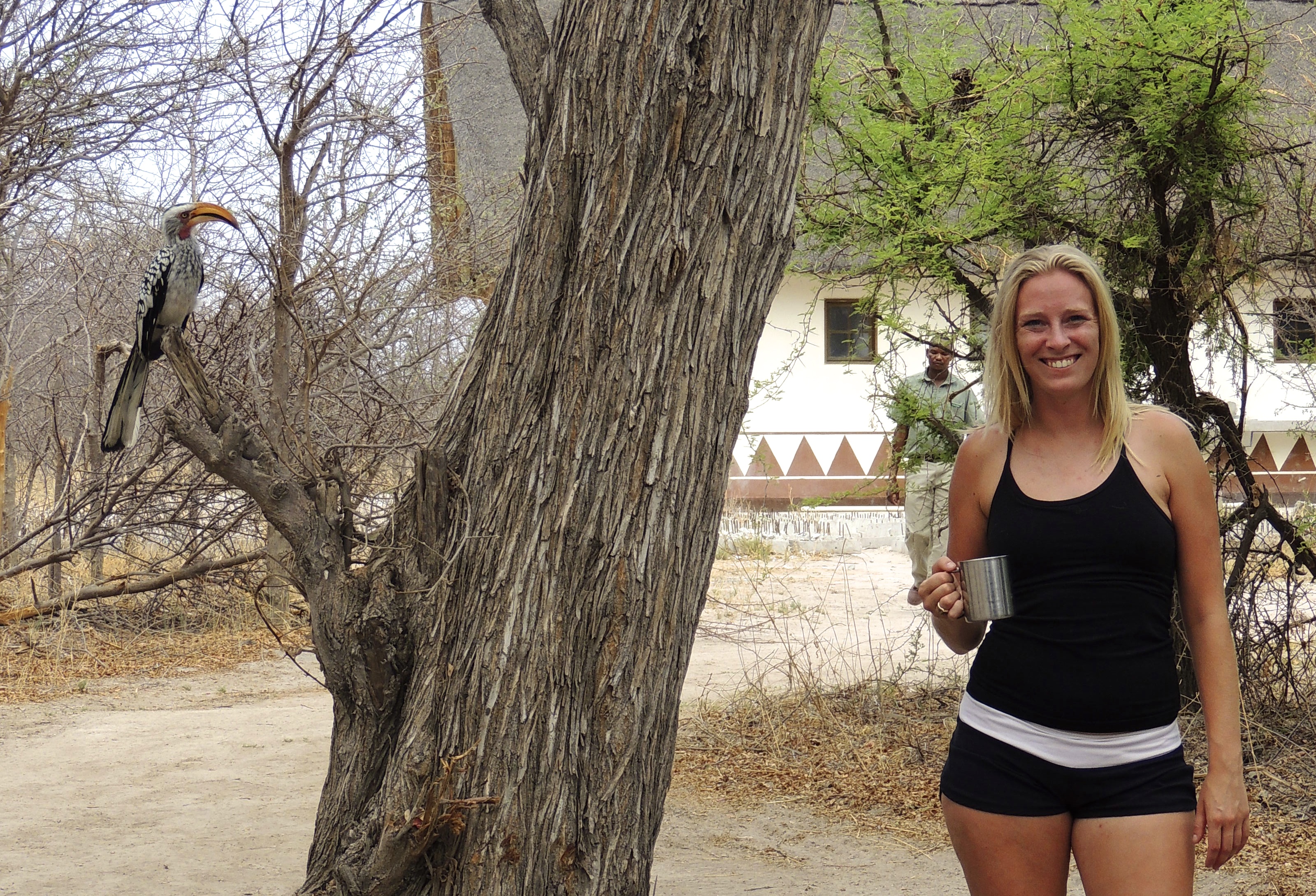
Toucan
Post breakfast, we drove out to Baines’ Baobabs, which are also in the Nxai pan. These are probably (behind Rafiki’s tree of course), the most famous of baobabs, drawn by the artist Thomas Baines in 1862. If you compare the baobabs in his painting to those standing today over 150 years later, the only difference is that one branch has broken off – these are some survivor trees.
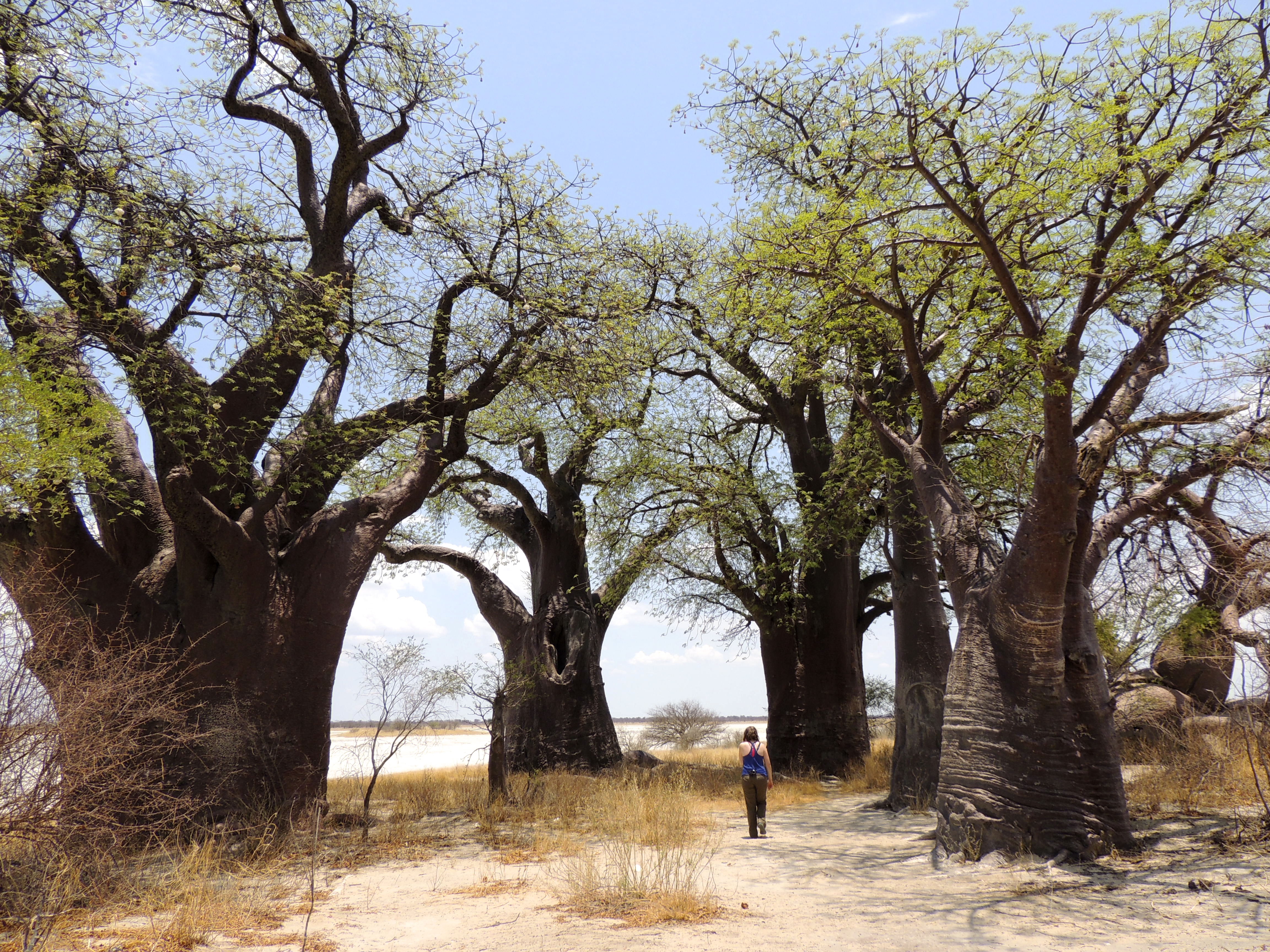
You can barely see Emily!
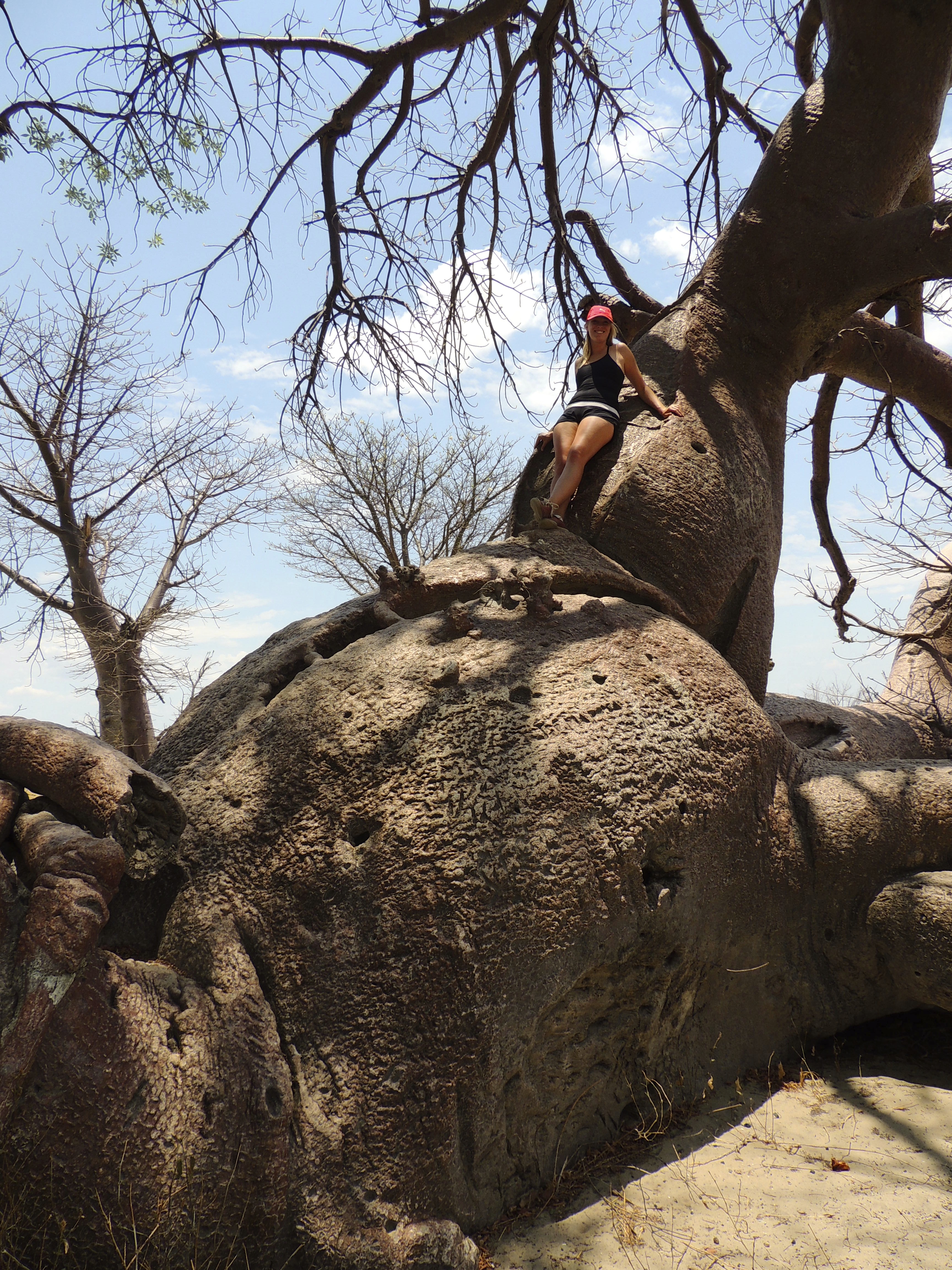
Big ol baobab!
The sheer size of the baobabs was incredible. I’ve been to ancient forests in British Columbia, and was impressed by the size of the trees there, but man. The baobabs would make an incredible base for a fort. Unfortunately, they’re hard to climb – they have a fairly smooth exterior, and since I’ve already had a decent fall on this trip (climbing on our truck), I figured I wouldn’t try to go too high up into these guys.
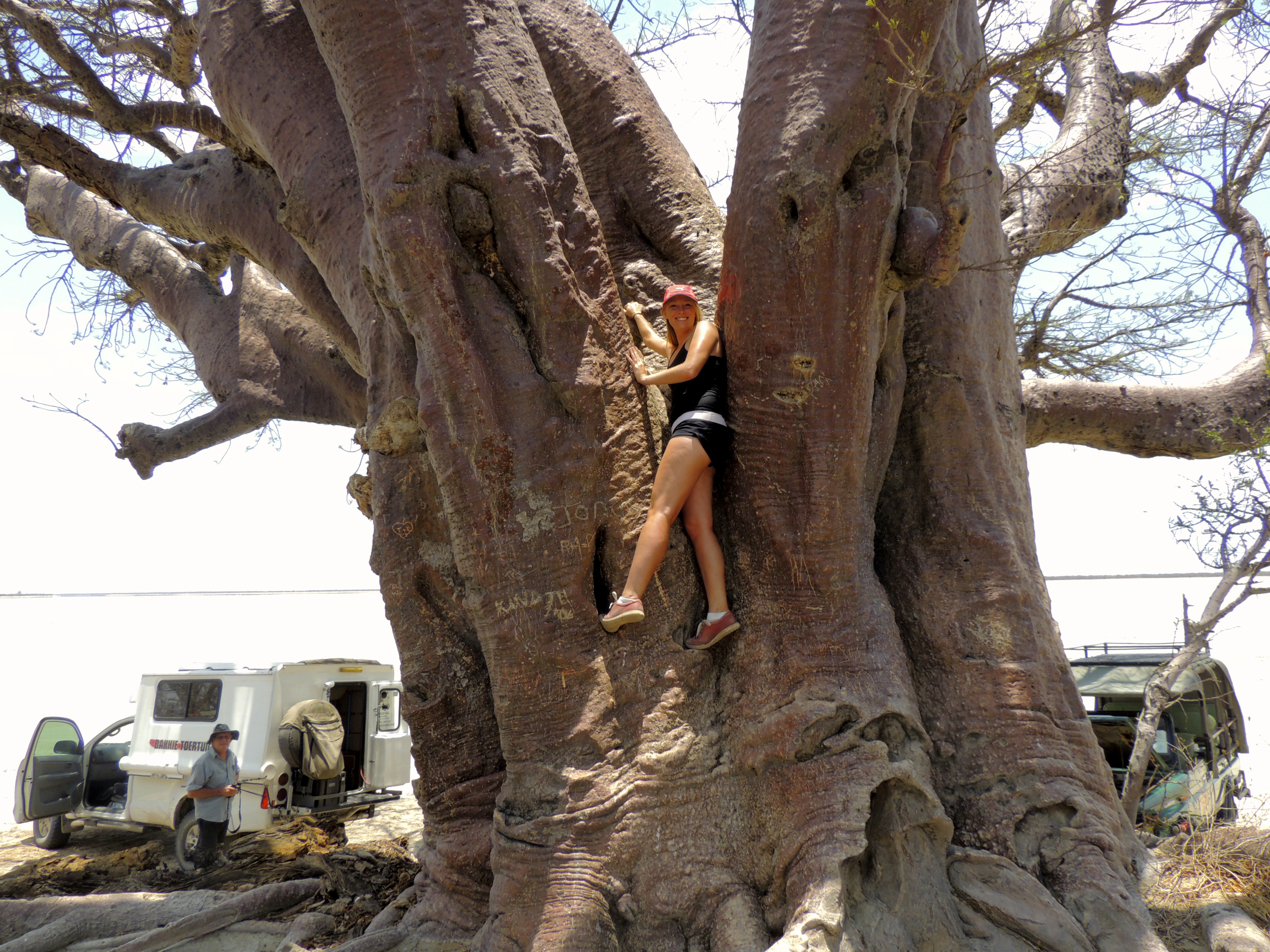
You can see the salt pans behind!
The landscape surrounding the baobabs was also remarkable, and it’s just crazy that so many large plants could have lived in such a dry area in such close proximity to one another and survived (or at least it is when you’ve been programmed to spacing trees a certain distance from one another).
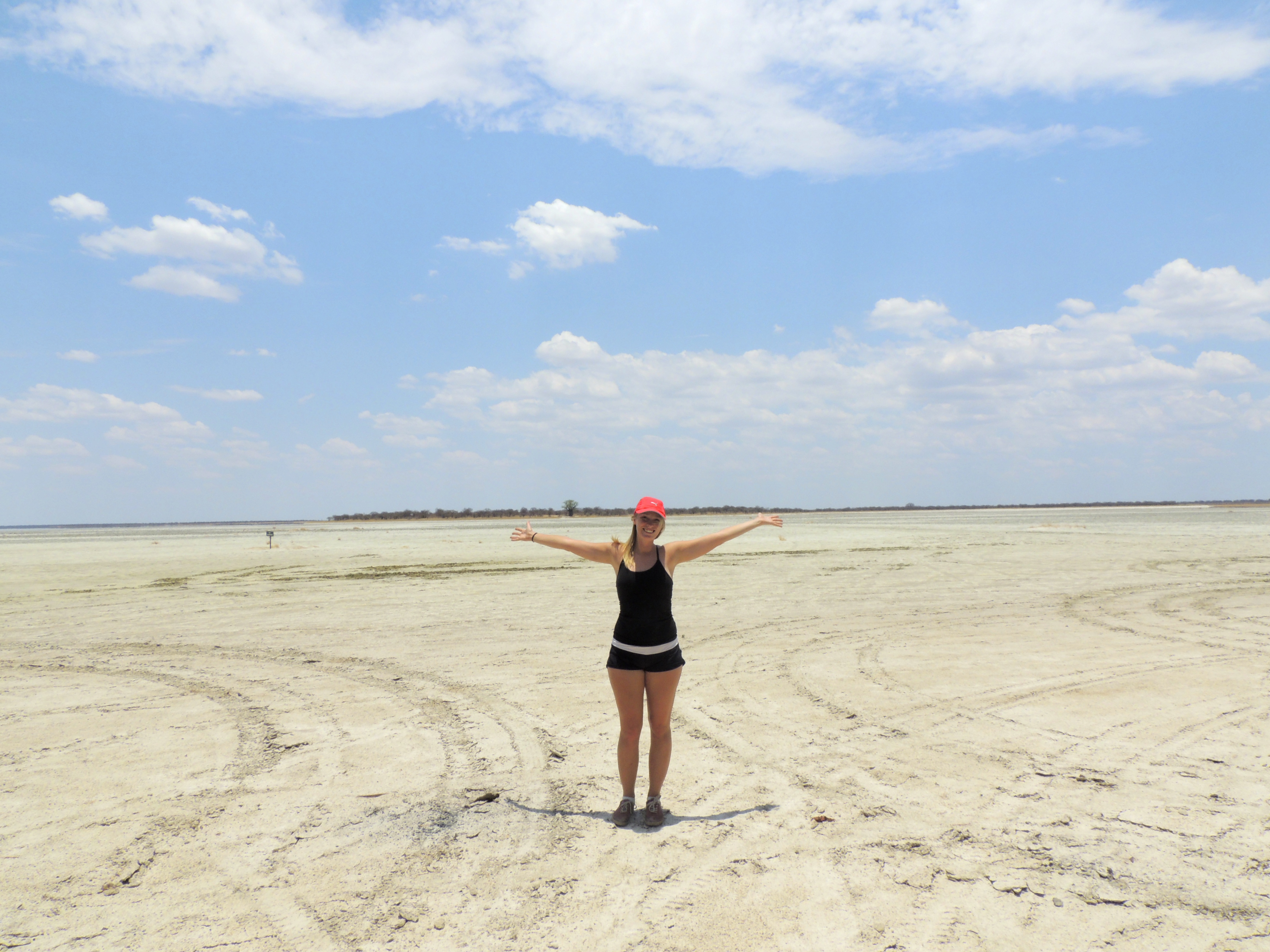
Mmm, salty.
That was our last night in Gweta, but before leaving I had to say goodbye to the baobab I had hammocked under. With a six-metre diameter, it’s an astonishing three thousand years old.
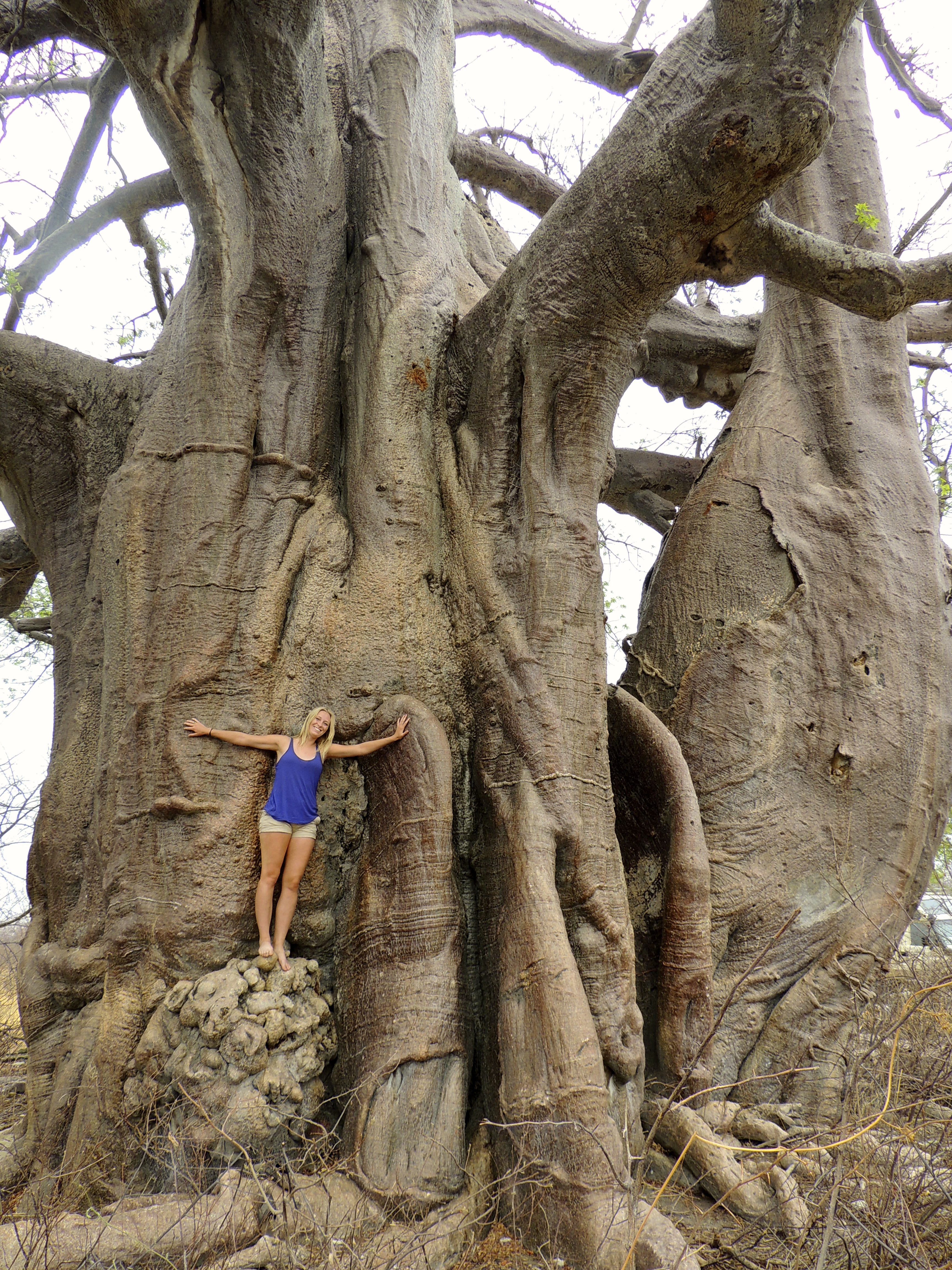
Ancient baobab
We caught another bus from the Gweta station to head to Maun. The Gweta bus stop was a little less busy than that in Gaborone.
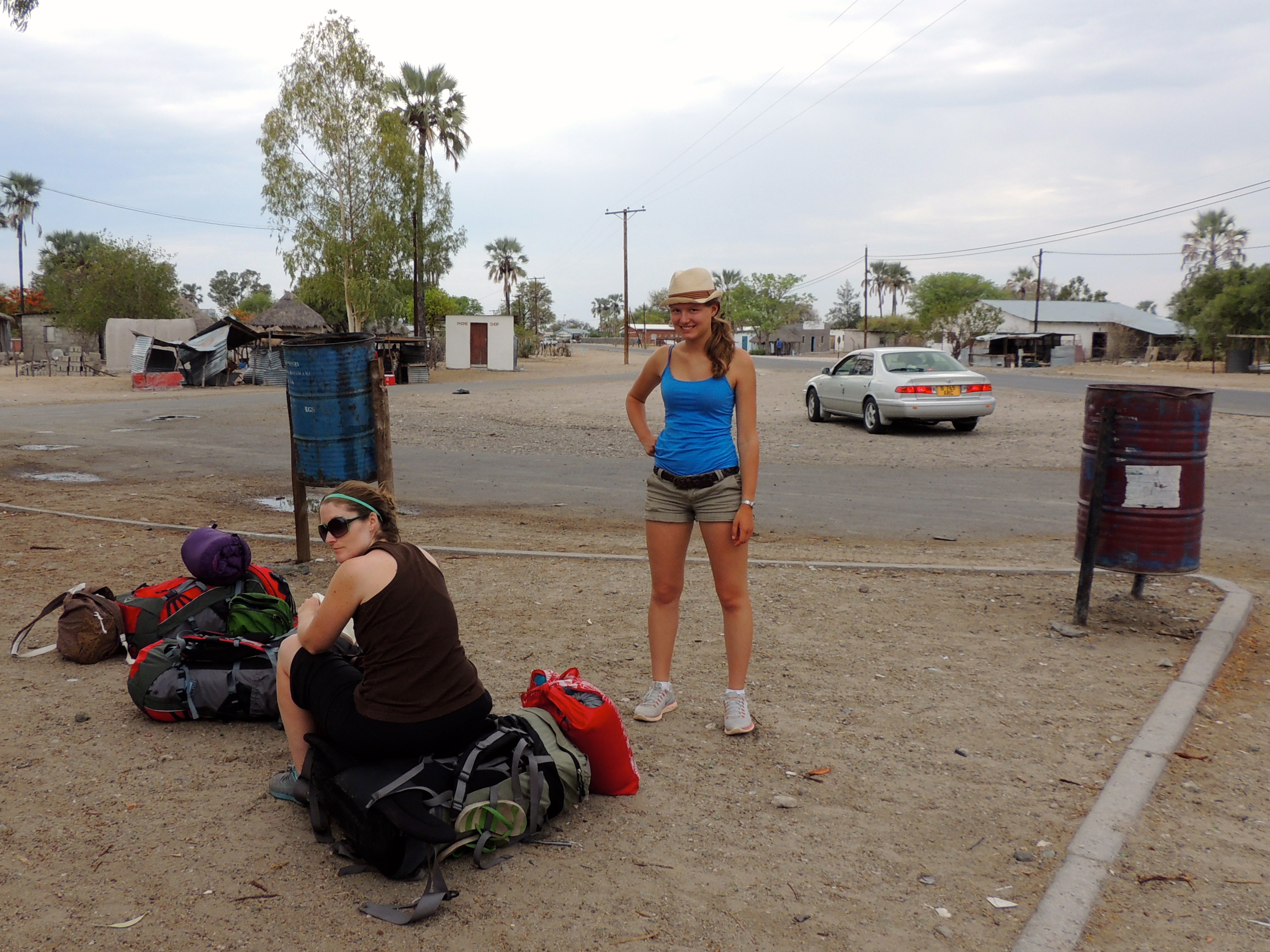
Emily and Julia waiting for the bus
Maun is the jumping off point to the Okavango Delta, and it was such a relief to be on water again – I didn’t realize how much I missed it! Of course, that does mean keeping your ears open for crocs and hippos, but the locals don’t seem too concerned by that.
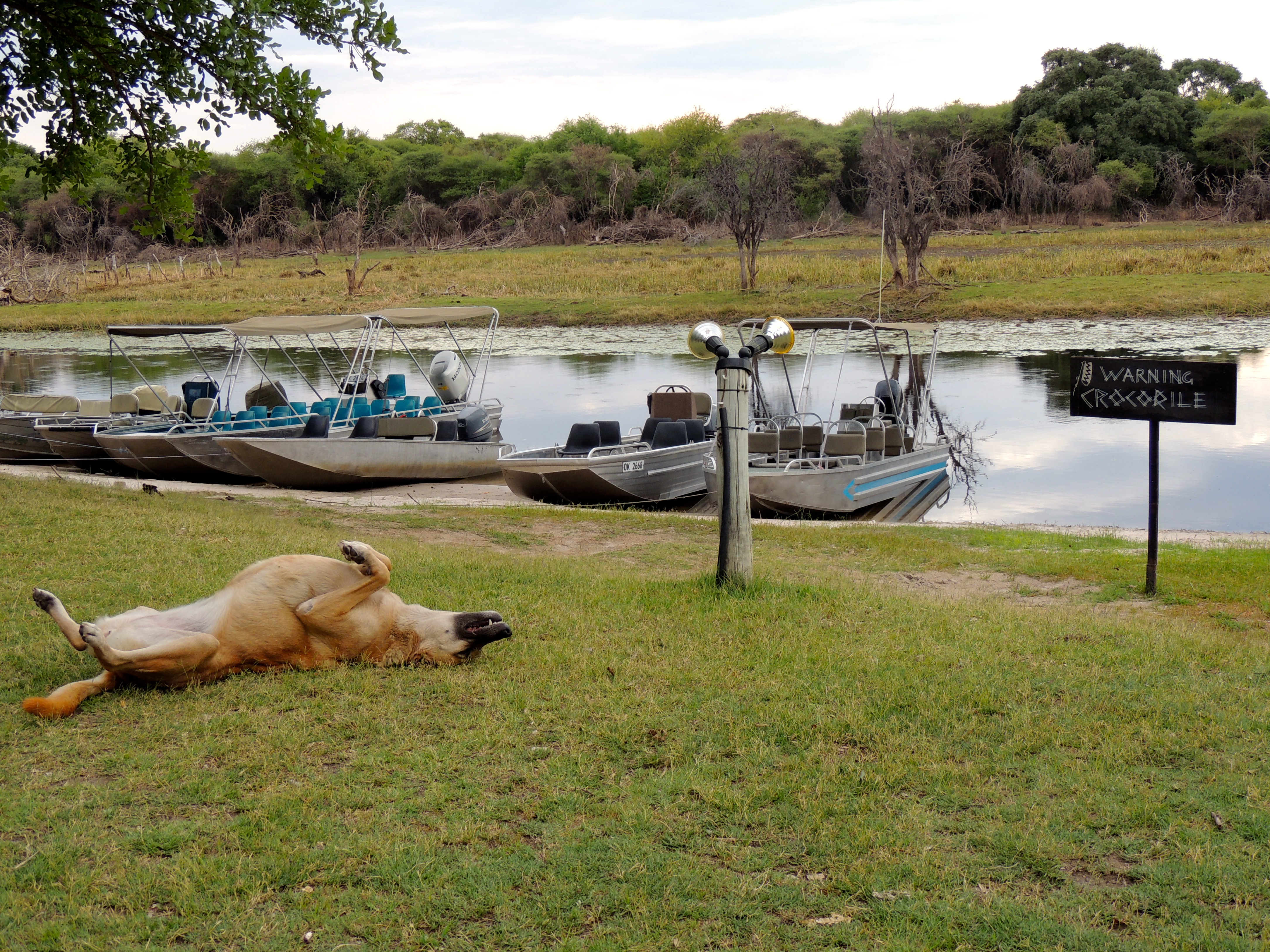
Classic dog nap
We were treated to an incredible sunset our first night in Maun, which was really cool to see since it’s the rainy season and sunsets are generally obscured by clouds.
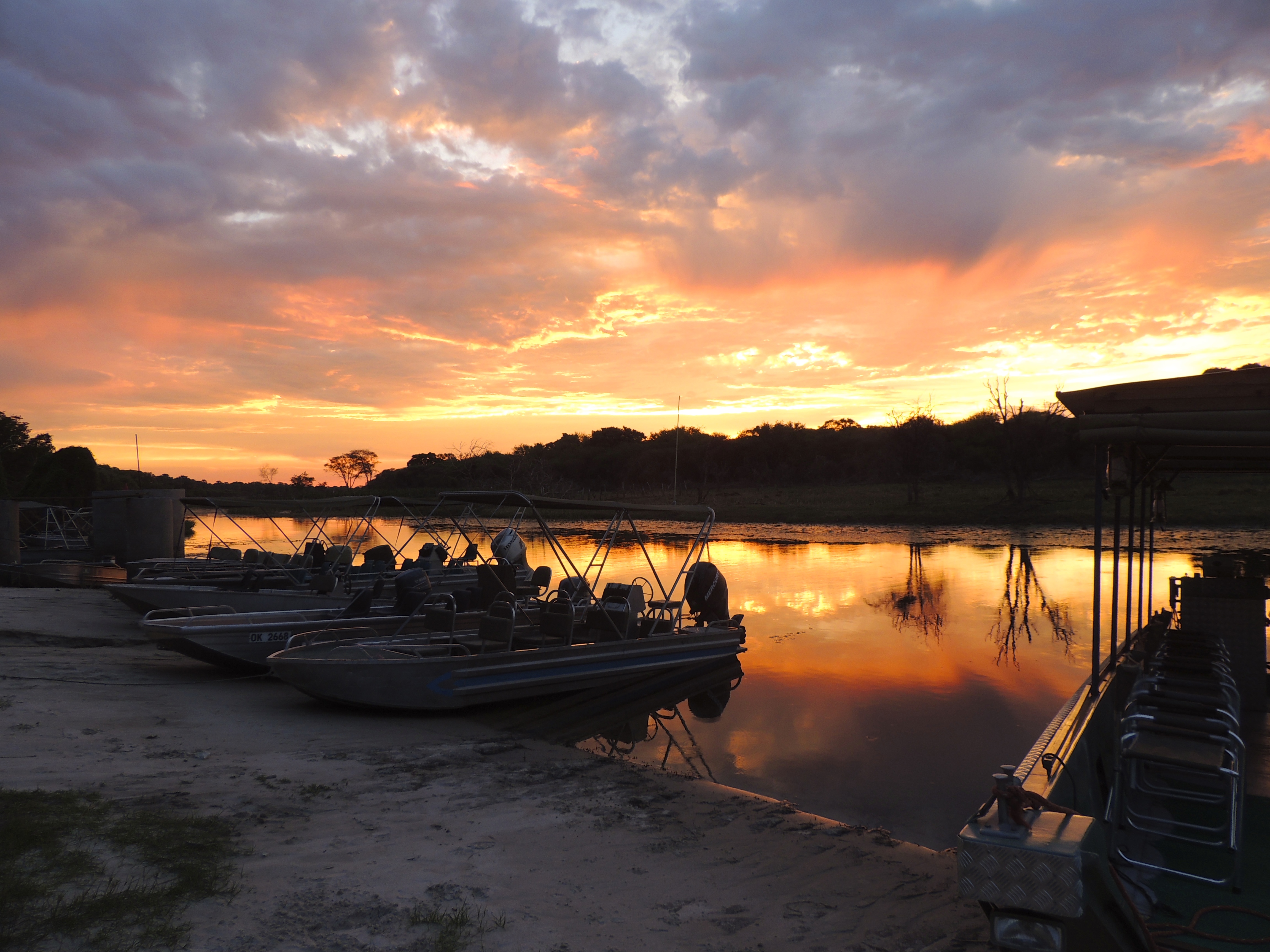
Sunset over the boats
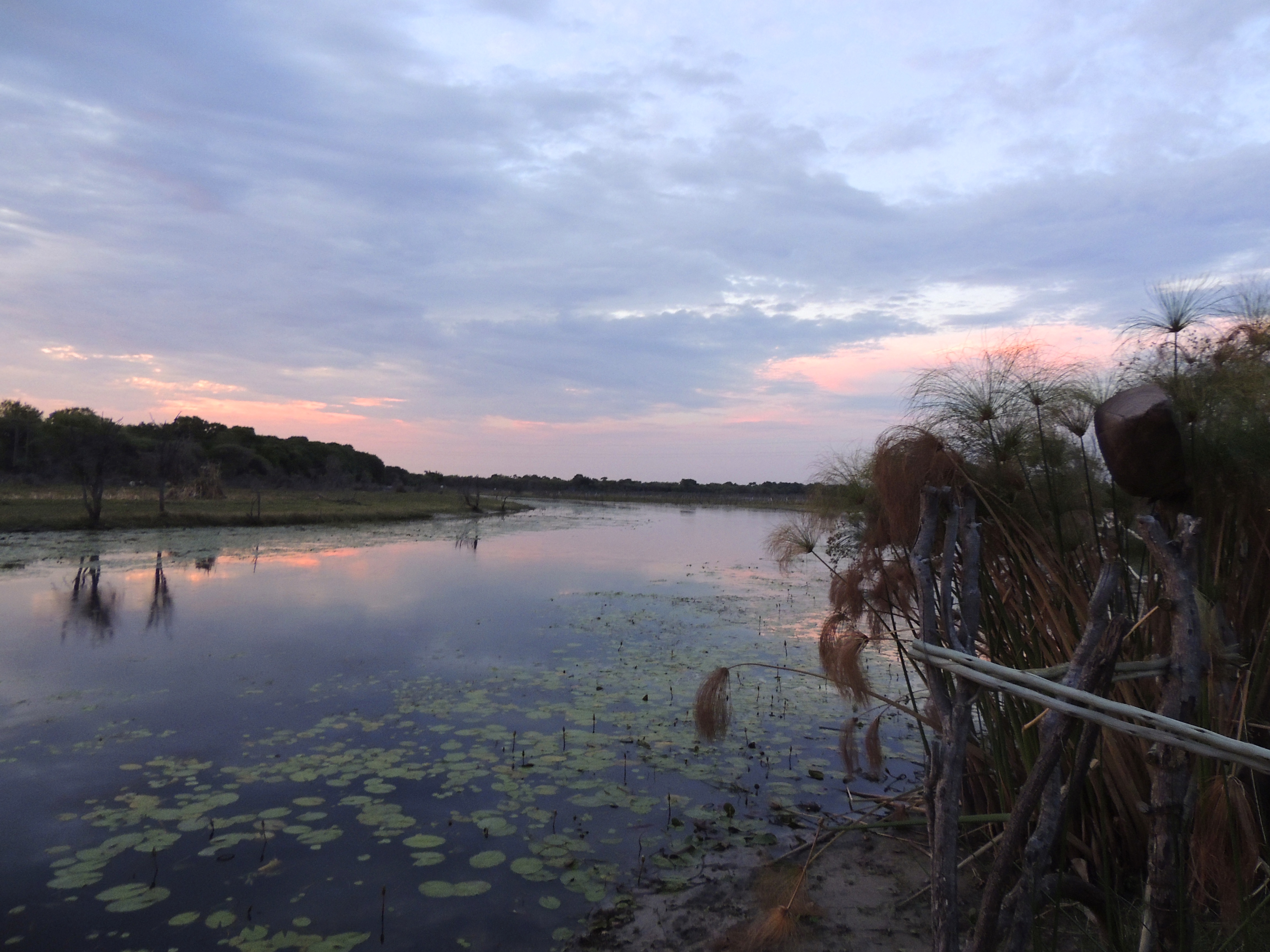
Looking down the Bora River
The following day, we boated out to one of the villages in the delta to go on a mokoro trip with some of the locals. Mokoros are small boats (historically made from wood, but now fiberglass is used) propelled through poling.
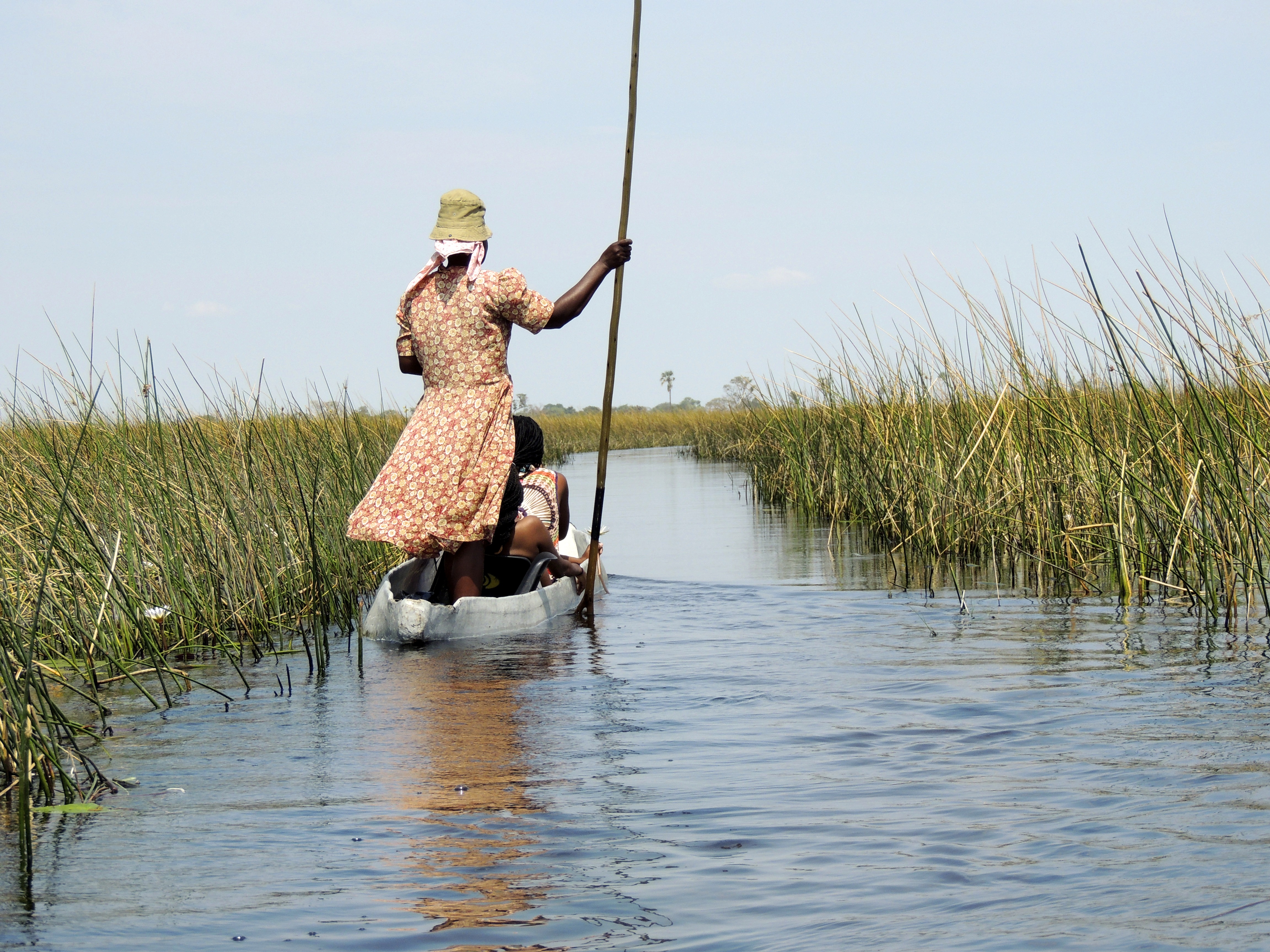
Poling down the Bora
It was a neat and relaxing (for us) way to travel through the delta, but I was actually struck at how much it reminded me of Northwestern Ontario. There was a place my family used to boat to when I was a kid that had a tonne of lily pads and reeds, and other than the foreign birds, the sandy bottom, and the forty-degree heat, I might have been on Wabigoon. We did see some interesting birds and some zebra, and well as a tiny little frog!
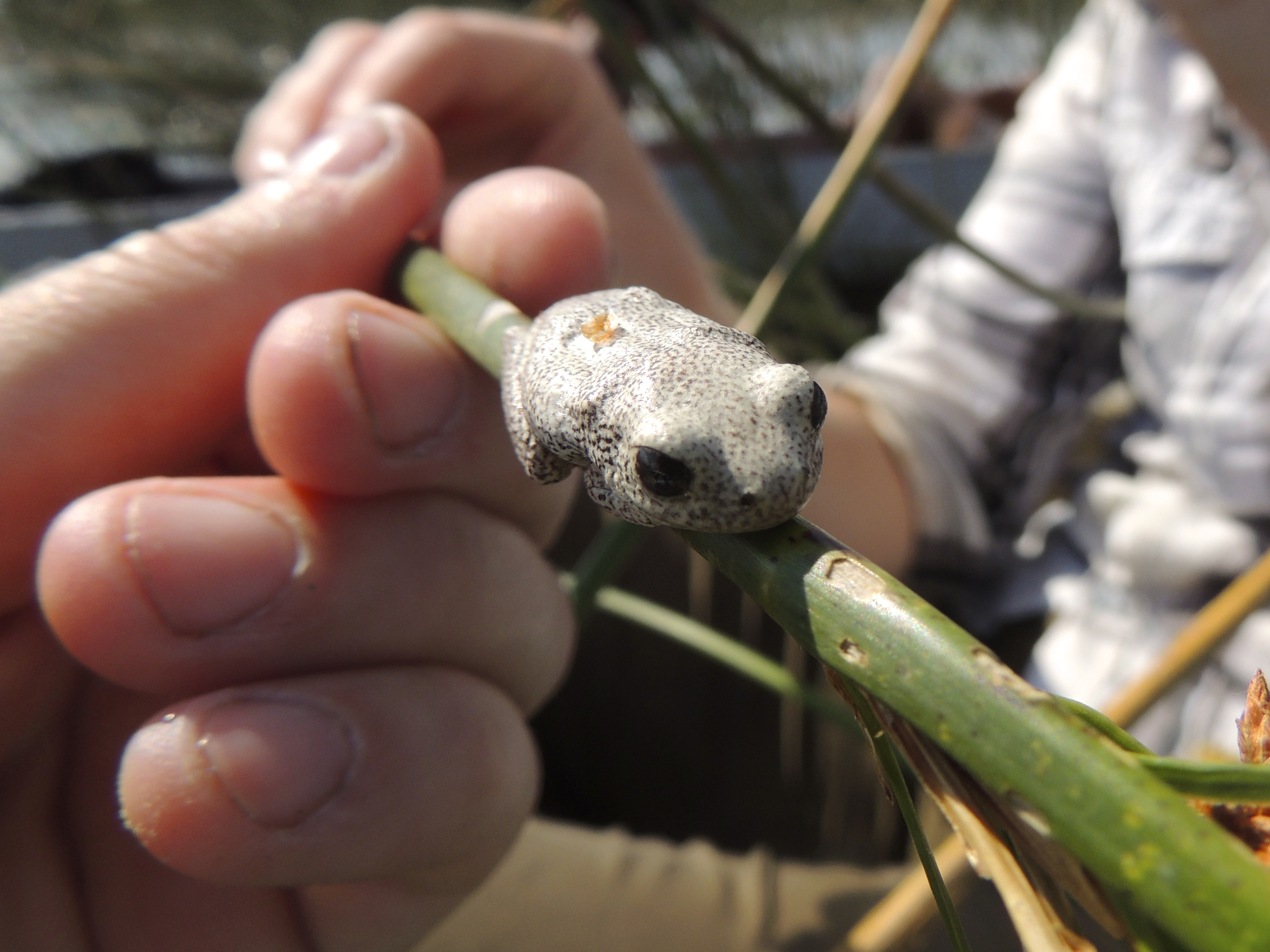
Not even as big as my thumb!
It was a great way to spend the day, though I would love to see the delta from the sky. But again, after the desert, it was great to actually be on the water and to see all the greenery.
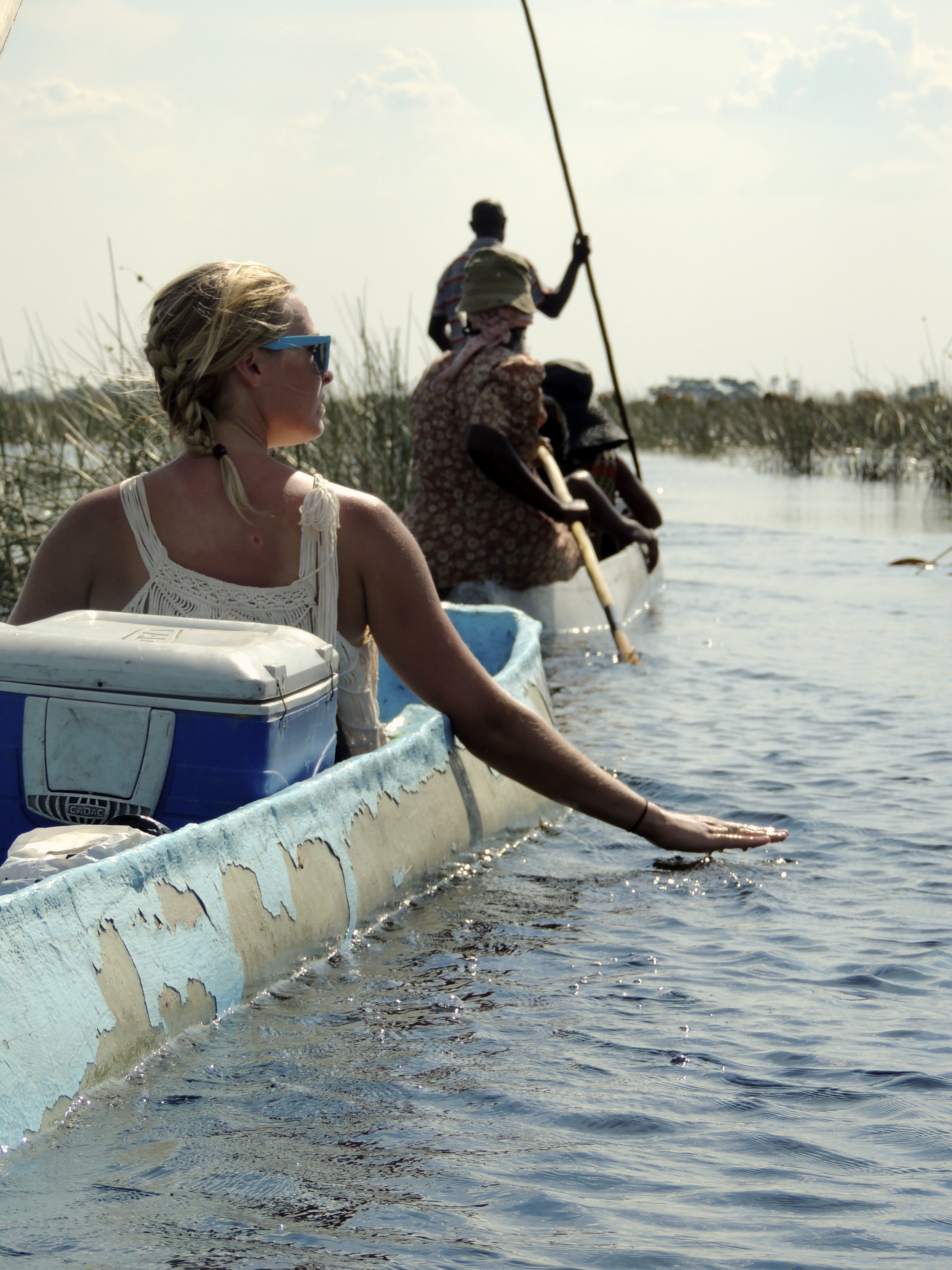
Relaxing afternoon

Croc baiting with my toes
Our last day was a horseback trip through the delta and the village around Maun. It was both Emily and Julia’s first time on horses, and our guide was pretty quiet, so I got to give a mini lesson!
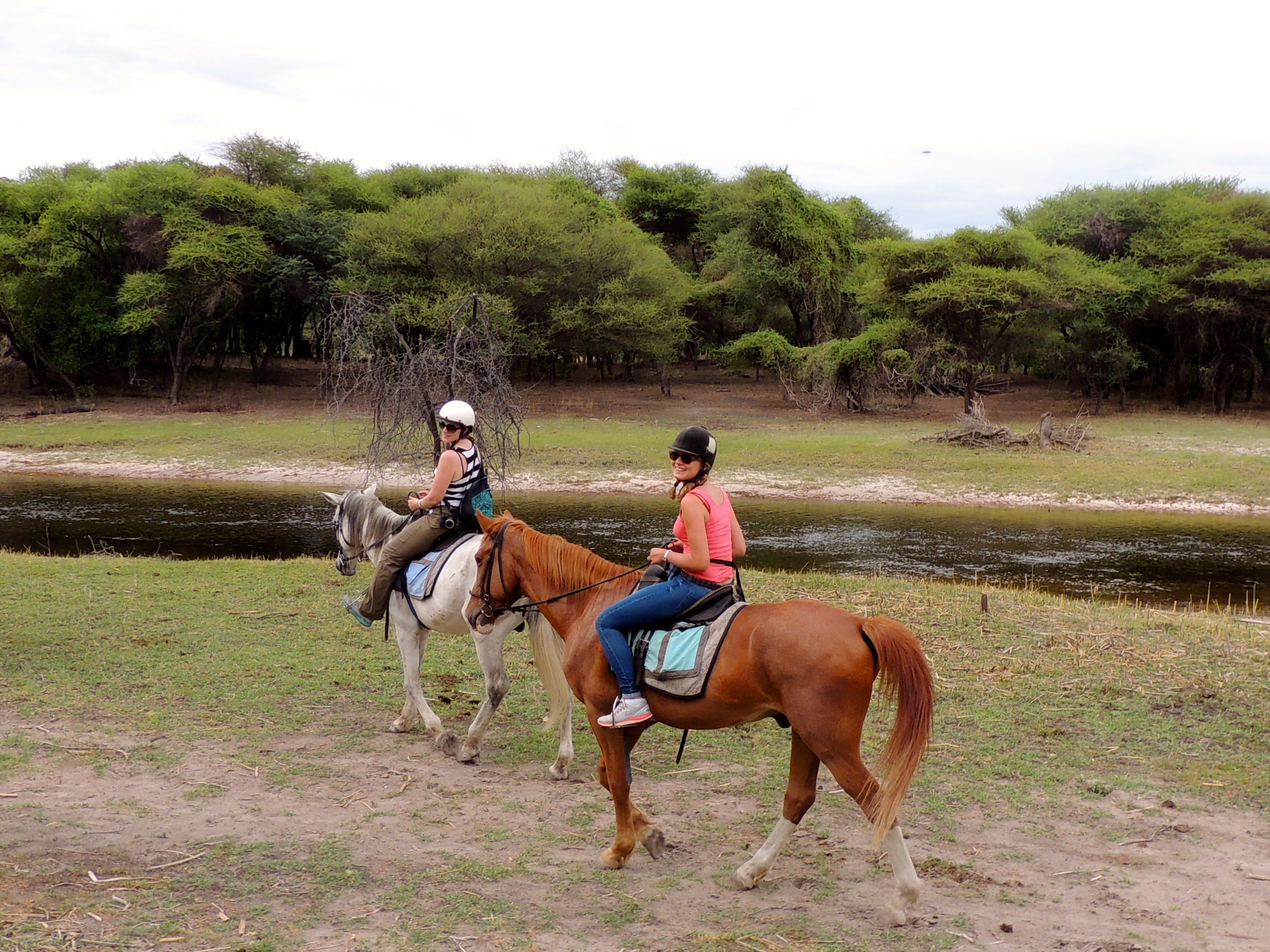
First timers!
Today was another travel day – and things actually went according to plan, and we are in Livingstone, Zambia! We caught a 6:30am bus out of Maun to Nata, and only had to wait 15 minutes for our connection there. Our minibus broke down just outside Kasane, but right across from the road to the border crossing, so it worked out perfectly! And the Zambian border was surprisingly easy to cross (despite none of us having any money). Just a quick ferry ride over the Zambezi, a visa page, and we were at our backpackers by 5pm!
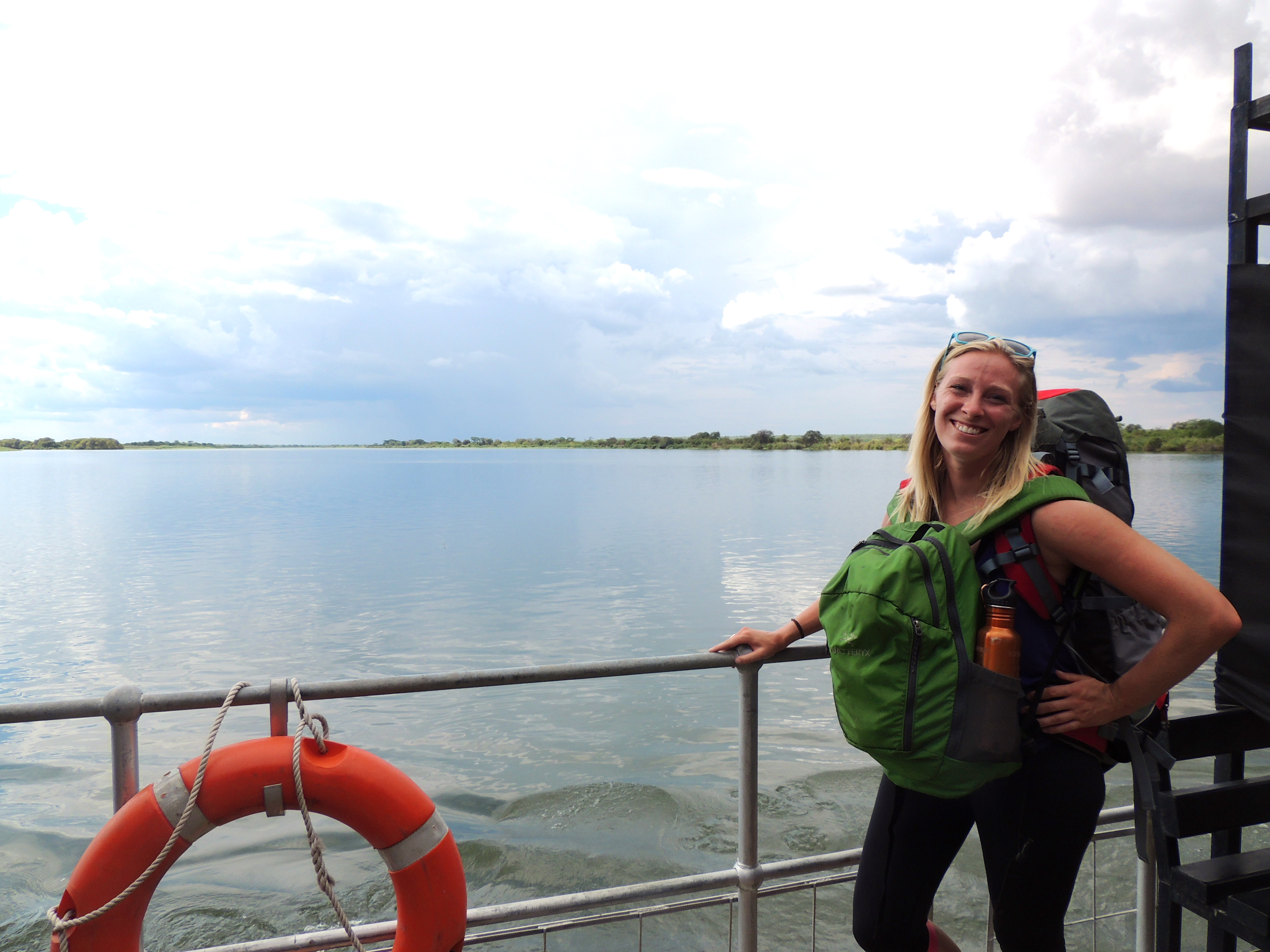
Ferry across the Zambezi
Botswana was absolutely beautiful, and I can’t wait to visit again when I’m loaded and can afford to fly around the delta. There is a ton to see and do in Livingstone though, so I’m looking forward to getting the Zambian chapter of our journey started!
Pula!
 I am a part of all that I have met///Rose v Date